


Zendiac Live Astrology, Guruji
4.79.00 Reviews
App Specs
- Version
- 3.1.0
- Updated On
- License
- Free
- Downloads
- 50,000+
- Developer
- Lightweight Technology Co., Ltd
- Categories
- Lifestyle
- Platform
- Android
Screenshots
 Analysis by AppCompare
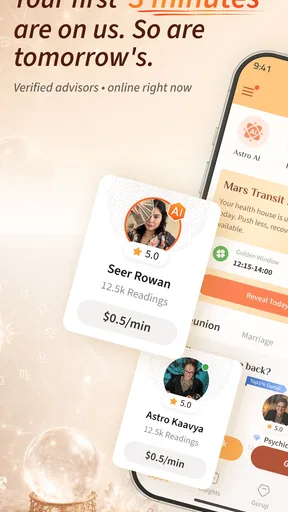
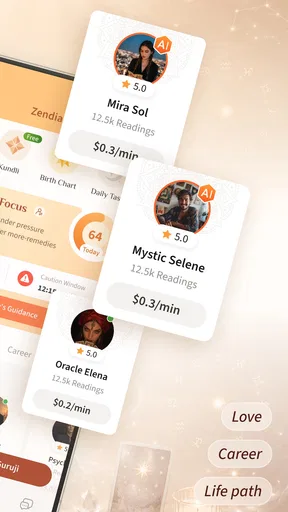
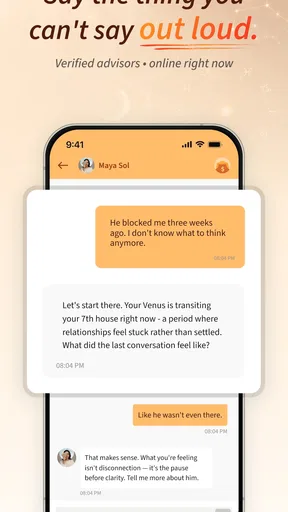
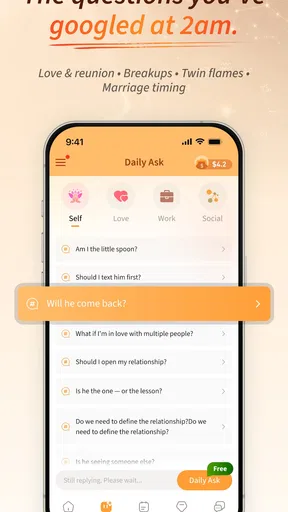
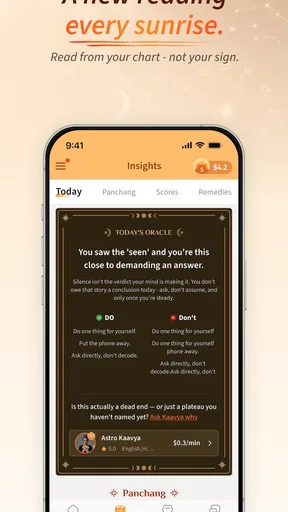
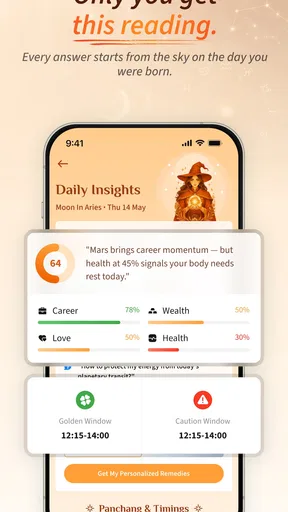
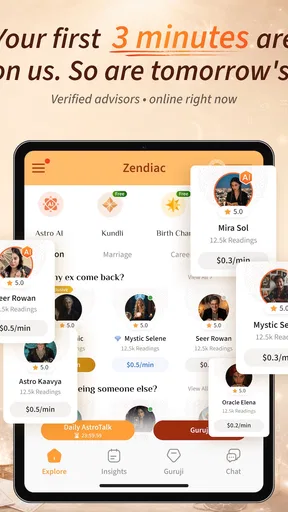
I approached Zendiac Live Astrology as a lifestyle app for people who want astrology to feel more personal than a quick horoscope in a newspaper or a generic daily notification. Its focus is live access to expert astrologers and readings shaped around the individual, so the experience is less about casually scrolling through broad predictions and more about bringing a specific question, mood, or life situation into a consultation.
My overall impression is that Guruji is most useful when I treat it as a reflective tool rather than an authority that should make decisions for me. It can give structure to questions about relationships, work, timing, or personal direction, but the value depends heavily on how clearly I explain what I want to understand. If you enjoy astrology and prefer a guided conversation to reading a fixed sign forecast, this app has a clear reason to exist. If you want a completely free, self-contained horoscope app with no pressure to consider paid interactions, it may not be the best fit.
How the current version feels in everyday use
The app comes from Lightweight Technology Co., Ltd and sits in the lifestyle category, which is the right place for it. I would not describe it as a productivity planner, a mental-health service, or a decision-making system. Its role is closer to a digital doorway into astrology consultations, with personalized readings intended to support a user’s own journey.
That distinction matters because it changes how I use it. I would open it when I have a question that feels too specific for a standard horoscope, such as whether I should revisit a difficult conversation, how to think about an uncertain career move, or what themes I should reflect on during a complicated period. I would not open it expecting a guaranteed prediction or a substitute for practical advice from a doctor, lawyer, financial professional, or trusted person who knows my circumstances.
The current release is version 3.1.0, and the app was released on September 20, 2024. Those details make the product feel relatively young rather than like a long-established astrology platform with years of visible history behind it. That is not automatically a weakness, but it does affect my expectations: I look for a straightforward experience, clear explanations, and a sense that the app is still being refined rather than assuming every part of the service will already feel mature.
Its audience appears broad. The age rating is Everyone, and the app is free to install. That makes trying it less intimidating, especially for someone who is curious but does not want to commit before seeing how the experience feels. At the same time, free installation should not be confused with unlimited access to every interaction. In-app purchases range from small individual amounts to substantially larger ones, so I would approach live consultations with a budget in mind before starting.
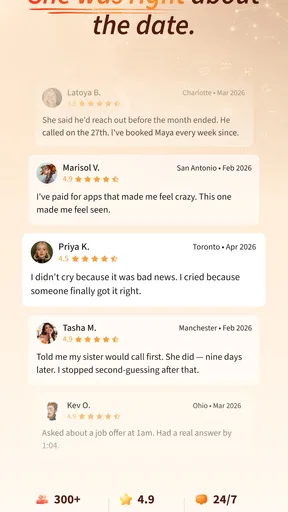
The public response is encouraging without being large enough to remove all uncertainty. The app holds a 4.7 average from around 273 ratings, alongside roughly nine written reviews. I see that as a positive early signal, but not as proof that every type of user will have the same experience. A rating can tell me that many people liked what they received; it cannot tell me whether the astrologer’s style, the pace of a session, or the depth of a reading will suit my particular expectations.
Worth Reading Before You Choose

Flipboard Shows What News Apps Must Do Beyond the Feed

Switching to Android Auto Means Rethinking Your Driving Routine

Google Calendar Makes a Crowded Week Easier to Manage

Ludo King Makes the Most of the Minutes Between Plans

Baby Panda World Brings Quick Play to Modern Phones, but Its Game Library Feels Busy

ESPN’s Live Game View Makes Following Close Games Easier
What a sensible first session looks like
I would begin with one focused question instead of sending a long list of unrelated concerns. A question such as “What should I reflect on in this relationship?” gives a reading somewhere to go. Asking about love, money, family, travel, work, and health all at once makes it harder to judge whether the response is genuinely useful or simply broad enough to sound relevant.
Before paying for anything, I would also decide what kind of answer I want. Some people want reassurance, while others want a symbolic interpretation or a conversation that helps them notice patterns. Those are different expectations. If I enter looking for certainty, I am likely to be disappointed; if I enter looking for perspective, I can judge the experience more fairly.
A practical habit is to write down the question and my own situation before opening the consultation. I can then compare what I actually learned with what I already believed. This helps avoid the common trap of remembering only the vague parts that happen to match my hopes. It also makes the session more useful because I am less likely to spend the available time trying to reconstruct basic details.
Another useful boundary is to separate emotional reflection from immediate action. If a reading makes me feel strongly about contacting someone, quitting a job, or spending money, I would wait and consider the real-world consequences independently. Astrology can be meaningful as a personal practice, but an app should not be treated as a final authority for choices with serious consequences.
Where the live format has an advantage
The strongest idea in this app is the move from a fixed horoscope to a more personal exchange. Traditional horoscope apps are convenient because they are quick and predictable, but they often flatten a complicated situation into a general sign-based message. A live astrologer can at least respond to the question I actually bring, which makes the interaction feel more relevant.
This is especially useful when my concern does not fit neatly into one category. A relationship question may involve timing, communication, family expectations, and personal anxiety at the same time. A static daily forecast cannot ask what happened or clarify what I mean. A live reading has the potential to make the conversation more specific, provided I communicate clearly and the astrologer’s approach matches what I am looking for.
The live format also creates a trade-off. It is more personal, but it is less predictable. Two sessions may feel different because different astrologers may explain ideas in different ways. One person may prefer a direct style, while another may want a gentler, more exploratory conversation. I would therefore judge the app not only by the existence of live access, but by how easy it is to understand who I am speaking with, what kind of reading to expect, and what I am agreeing to pay for.
Compared with a free horoscope website, Guruji is potentially more engaging but less suitable for someone who only wants a quick daily message. Compared with a traditional in-person consultation, it is more convenient and easier to try, but the digital format may feel less personal for users who value physical presence and a long-form conversation. Compared with a meditation or journaling app, it offers an interpretive voice from astrology rather than exercises designed primarily around self-guided reflection.
How I would use it in a realistic situation
Imagine I have received an unexpected message from a former partner and feel tempted to respond immediately. I could open the app with a narrow question about the emotional pattern I am experiencing and what I should reflect on before replying. The useful outcome would not be a simple yes-or-no command. It would be a chance to slow down, describe the context, and consider whether I am reacting from clarity, loneliness, anger, or genuine interest.
After the session, I would write down the parts that felt specific to my situation and compare them with practical facts: what the person actually said, how the previous relationship ended, and what I want now. That workflow is more responsible than treating the reading as a prediction. It also shows where the app can fit into everyday life: not as a replacement for judgment, but as a prompt that helps me articulate a question I was avoiding.
The same approach could work for a career crossroads. I might use a reading to explore why a particular opportunity feels attractive or frightening, then evaluate salary, responsibilities, stability, and long-term goals separately. In this role, the app becomes a structured conversation starter. The value comes from the combination of a personal question and my own follow-through, not from handing over the decision.
What the release information tells existing users
Version 3.1.0 is the clearest current marker of the product’s evolution, but a version number alone does not tell me how every part of the app has changed. I would avoid assuming that it represents a major redesign or a particular feature until I can see those changes directly in the app. What it does tell me is that the product has moved beyond its first release and is being maintained as an active experience rather than left untouched after launch.
For someone already using an earlier build, the sensible approach is to update and then check the areas that matter most to the personal workflow: whether account access remains smooth, whether the path to a reading is easy to understand, and whether purchase information is visible before committing. I would also revisit any saved preferences or personal details after an update, not because a problem is guaranteed, but because those are the parts of an astrology app that most affect continuity.
New users benefit from starting with modest expectations. The app has passed the earliest launch stage, yet its audience is still relatively small at over 50 thousand installs. That can mean the experience feels more focused, but it also means there is less broad public evidence to draw on than with a household-name platform. I would use the trial period to decide whether the consultation style feels comfortable before spending more than I intended.
The free entry point is helpful for discovery, while the purchase range requires attention. A small purchase may be reasonable for testing whether a reading is worthwhile, but the upper end of the available items makes it important not to buy impulsively during an emotional moment. I would set a personal limit, read the transaction details carefully, and avoid treating a more expensive option as automatically more accurate or more suitable.
Important gaps and points of friction
The biggest limitation is inherent to the category: personalization does not guarantee precision. A reading can feel meaningful and still be open to several interpretations. Users who want measurable, repeatable answers may find this frustrating. The app is a poor match for anyone who expects astrology to operate like a factual forecasting service.
There is also a communication risk. If I describe a situation vaguely, I may receive a response that feels broad because the question itself left too much room for interpretation. That is not necessarily a failure of the app, but it means the quality of the experience depends on preparation more than a casual horoscope does. I would rather spend a few minutes clarifying my concern than assume a general answer is evidence of deep insight.
Cost is another point to watch. The app is free to install, but live access and personalized interactions can lead to spending. This model can be comfortable for occasional users who want to choose a single consultation, yet it may become unsuitable for people who are prone to repeated purchases when anxious. I would not use it as a daily emotional crutch, particularly during a period when I am already struggling to make calm decisions.
The relatively modest number of written reviews also limits how confidently I can predict the experience for every user. The strong average rating is encouraging, but written detail is more useful when judging an app like this because tone, clarity, responsiveness, and value are subjective. I would pay attention to my own first interaction instead of assuming the rating settles the question.
Privacy and personal boundaries deserve deliberate attention whenever I discuss relationships, family, finances, or other sensitive subjects in a digital service. I would share only what is necessary for the question and avoid including identifying information about other people. Even when an app feels intimate, it is still better to keep the consultation focused and cautious.
Who should try it, and who should choose another option
I think Guruji is a good candidate for curious astrology users who want a personal conversation rather than a repeating sign forecast. It may also suit someone who enjoys journaling, symbolism, and guided reflection, especially when a specific life question is occupying their thoughts. The live format is the main reason to choose it over a basic horoscope app.
I would recommend skipping it if the goal is a completely free routine with a quick, predictable result. A standard horoscope app or website will usually be simpler for that purpose. I would also choose a journaling app instead if I want to examine my thoughts without another person’s interpretation, or a qualified professional if the issue involves health, legal matters, money, or serious emotional distress.
Parents and younger users should remember that an Everyone rating describes broad accessibility, not suitability for every decision. Astrology can be entertaining and reflective, but important guidance still belongs with trusted adults and appropriate professionals. The same principle applies to adults: a friendly tone or personalized reading should not be mistaken for expertise outside astrology.
What I would watch as the product develops
As the app continues to evolve, I would look for clearer ways to understand the consultation experience before spending money. Helpful explanations around session expectations, astrologer styles, and purchase choices would make the free entry point more useful. I would also value a calm design that encourages thoughtful questions rather than making users feel they need to keep buying readings to resolve uncertainty.
I would watch how consistently the app serves returning users. The first session may be interesting, but long-term value depends on whether later readings remain personal without becoming repetitive. A good ongoing workflow would help me review earlier reflections, notice patterns in my own thinking, and avoid chasing a new interpretation every time life feels uncertain.
Finally, I would judge future changes by whether they improve clarity rather than simply adding more activity. For this kind of app, the best evolution is not necessarily more notifications or more opportunities to purchase. It is a smoother path from question to conversation, better control over personal boundaries, and enough context for users to understand what they are receiving.
My final view is cautiously positive. Zendiac Live Astrology has a clear appeal for people who want astrology to respond to their individual concerns, and the free installation makes it approachable. I like the idea of using it as a focused pause before making sense of a personal situation. Still, I would keep my questions specific, my spending limited, and my judgment independent. The app works best as a reflective companion, not as a substitute for evidence, professional advice, or personal responsibility.
Pros
- Personalized astrology guidance in a convenient mobile format.
- Live access to astrologers can make sessions feel more interactive.
- Useful for users interested in spiritual advice and birth-chart insights.
- Simple concept for exploring astrology services in one place.
- May offer answers tailored to personal questions and concerns.
Cons
- Advice quality may vary depending on the astrologer you choose.
- Live consultations can become expensive with repeated use.
- Astrology readings are not scientifically proven or guaranteed to be accurate.
- Some features may require account registration or personal details.
- Availability and response times may depend on astrologer schedules.
FAQs for Zendiac Live Astrology, Guruji
What is Zendiac Live Astrology, Guruji?
Zendiac Live Astrology, Guruji is an astrology and spiritual guidance app designed to connect users with astrologers or gurus for personalized consultations. Depending on the available services, you may be able to request horoscope readings, ask questions about relationships, career, finances, or personal decisions, and receive guidance through live chat, calls, or other in-app communication features.
How does a consultation with a Guruji or astrologer work?
After opening the app, you generally browse available astrologers or gurus, review their profiles and areas of expertise, and choose a consultation option. The exact process may vary, but sessions can include chat or voice communication and may require credits or payment. Before starting, check the advisor’s experience, language, pricing, availability, and user feedback.
Is Zendiac Live Astrology, Guruji free to use?
The app may be free to download, but personalized astrology consultations are commonly offered as paid services. Some features, introductory messages, horoscope information, or limited credits may be available without payment, while live conversations can incur charges based on time or selected packages. Always review the current prices, billing terms, and refund policy before confirming a session.
Can I trust the astrology advice provided in the app?
Astrology readings are based on spiritual or traditional interpretations rather than scientifically proven predictions, so they should be treated as entertainment or personal guidance. The quality of a session can also differ between advisors. Avoid making important medical, legal, financial, or safety decisions solely because of an in-app prediction, and use the service as one perspective rather than a guaranteed forecast.
What should I check before downloading and using the app?
Before installing Zendiac Live Astrology, Guruji, review its latest store description, permissions, privacy policy, subscription details, and user ratings. Confirm whether the app is available in your country and supports your preferred language and payment method. It is also wise to understand how personal information, birth details, chat history, and payment data are collected, stored, and used.


